

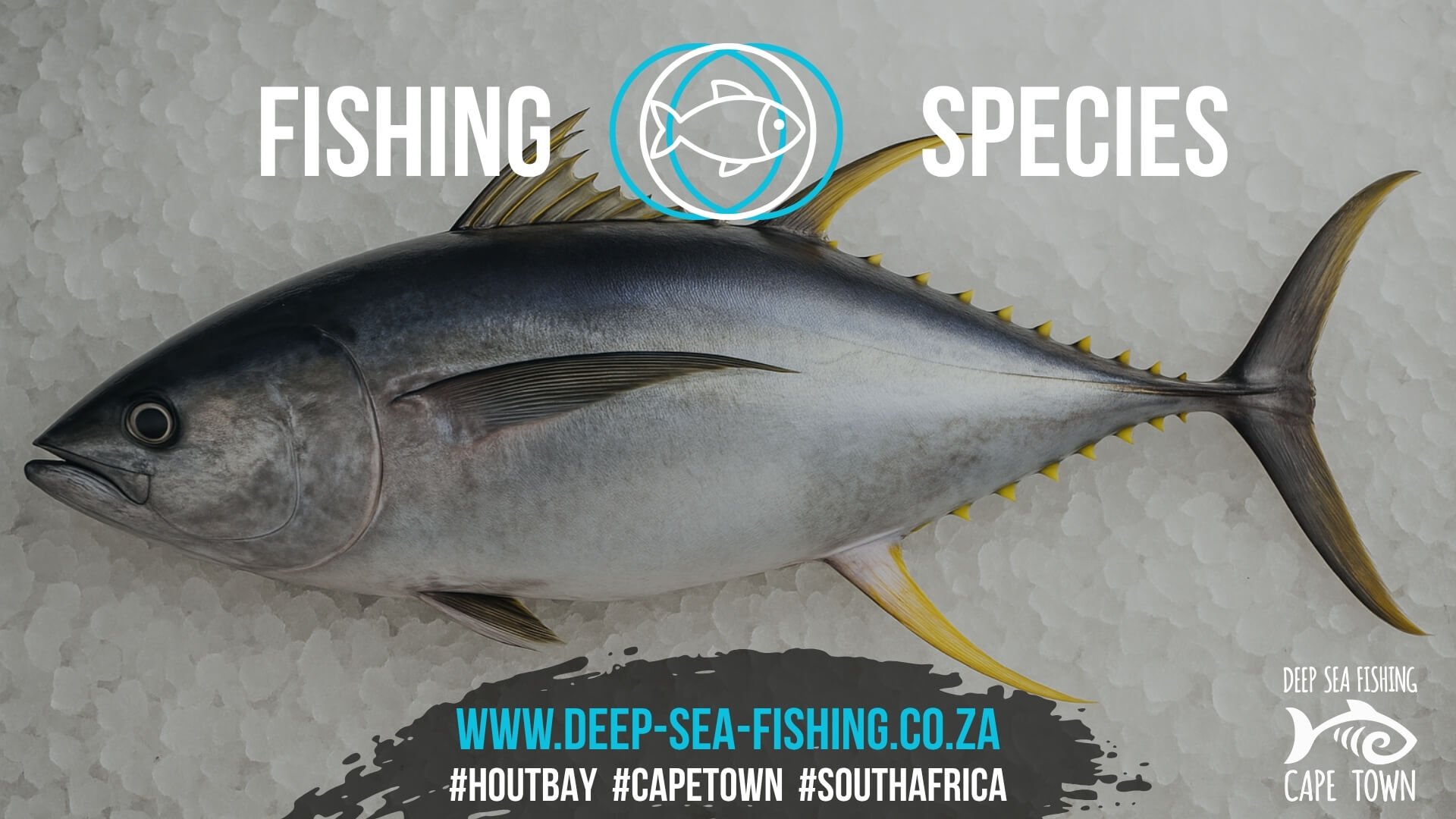
In Summer, people come from all over the world to fish for Marlin, Yellowfin Tuna, Longfin Tuna and Sharks.
In the winter months, our Cape Town based fishing charters offer Yellowtail, and inshore fishing charters.
In the winter months, our Cape Town based fishing charters offer Yellowtail, and inshore fishing charters.
Cape Town Fishing Seasons: A Month-by-Month Guide to What’s Biting
If you have ever wondered why a skipper in Hout Bay will happily run 45 nautical miles offshore in April but spend July working a bait ball two miles from the harbour wall, the answer is not stubbornness. It is oceanography.
Cape Town sits on one of the most dramatic biological boundaries on Earth. The cold, nutrient-rich Benguela system pushes up the west coast, the warm Agulhas Current wraps around Cape Point from the Indian Ocean, and the two of them shove against each other in a shifting, temperamental seam somewhere off the Cape Peninsula. That seam moves. It moves with the season, with the wind, sometimes within a single day. And the fish move with it.


Your Complete Month-To-Month Cape Town Fishing Season Fishing Guide
This guide breaks down every major species caught on deep sea fishing charters out of Hout Bay and Cape Town, when each one is realistically on the cards, and the reasons behind the migration. If you are trying to work out the best time of year to book a Cape Town fishing charter, start here.
Cape Town Fishing Calendar: Month by Month
| Species | Jan | Feb | Mar | Apr | May | Jun | Jul | Aug | Sep | Oct | Nov | Dec |
|---|---|---|---|---|---|---|---|---|---|---|---|---|
| Yellowfin & longfin tunaThunnus species | ||||||||||||
| Bigeye & skipjack tunaIncidental catch | ||||||||||||
| Cape yellowtailSeriola lalandi | ||||||||||||
| Cape breamReef fishing | ||||||||||||
| SharkMainly during tuna season | ||||||||||||
| Cape snoekThyrsites atun | ||||||||||||
| MarlinBlue and striped | ||||||||||||
| DoradoNeeds blue water | ||||||||||||
| West Coast rock lobsterPermit season only |
In season Some seasons Out of season
Seasons as reported by our skippers from years on the water off Hout Bay. Rock lobster is open only on designated days set each year by the Department of Forestry, Fisheries and the Environment, so always check the current notice. Species reports are always subject to change depending on weather conditions and other factors.
Why Cape Town’s Fish Move
Four forces drive almost everything that happens on the water here.
The Benguela Upwelling
Along the Atlantic seaboard, southerly and south-easterly winds drag surface water offshore, and cold water rises from the deep to replace it. That deep water is loaded with nutrients. Nutrients feed plankton, plankton feeds anchovy and sardine, and anchovy and sardine feed everything with teeth. This is why the Cape has such a spectacularly productive inshore fishery despite water that regularly sits at 11–13 °C.
The Agulhas Current
Warm Indian Ocean water sweeps down the east coast and rounds Cape Point, occasionally shedding warm eddies and filaments westward. Where that warm blue water meets the cold green Atlantic water, you get a temperature break, sometimes several degrees over a few hundred metres. Pelagic gamefish — tuna above all — patrol these breaks. They are edges, and edges concentrate food.
The Wind
In summer the south-easter dominates. It cools and dirties the water immediately around Cape Point while pushing warm water offshore. Westerly and south-westerly winds do the opposite: they nudge the warm current line closer to shore, which is precisely when the tuna come within comfortable range of the sport fleet. Skippers watch sea surface temperature charts obsessively for this reason.
Baitfish
Anchovy, sardine, maasbanker and squid spawn and shoal on a seasonal cycle. Snoek, yellowtail, geelbek and tuna are all following the same lunch. When you hear a local say “the bait is in,” they are telling you the season has started.
The 18-degree rule of thumb: many Cape skippers won’t seriously start fishing for yellowfin until the sea surface reads about 18 °C. Below that, you are usually in the wrong water.
The Species You Can Expect to Catch
Yellowfin Tuna
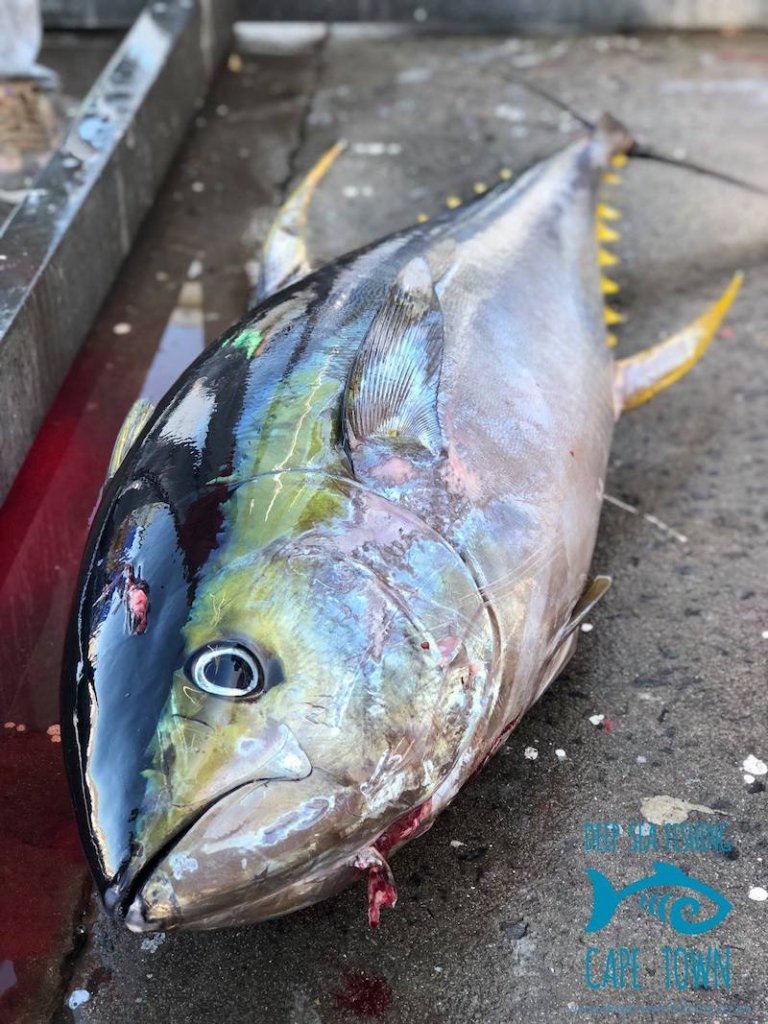
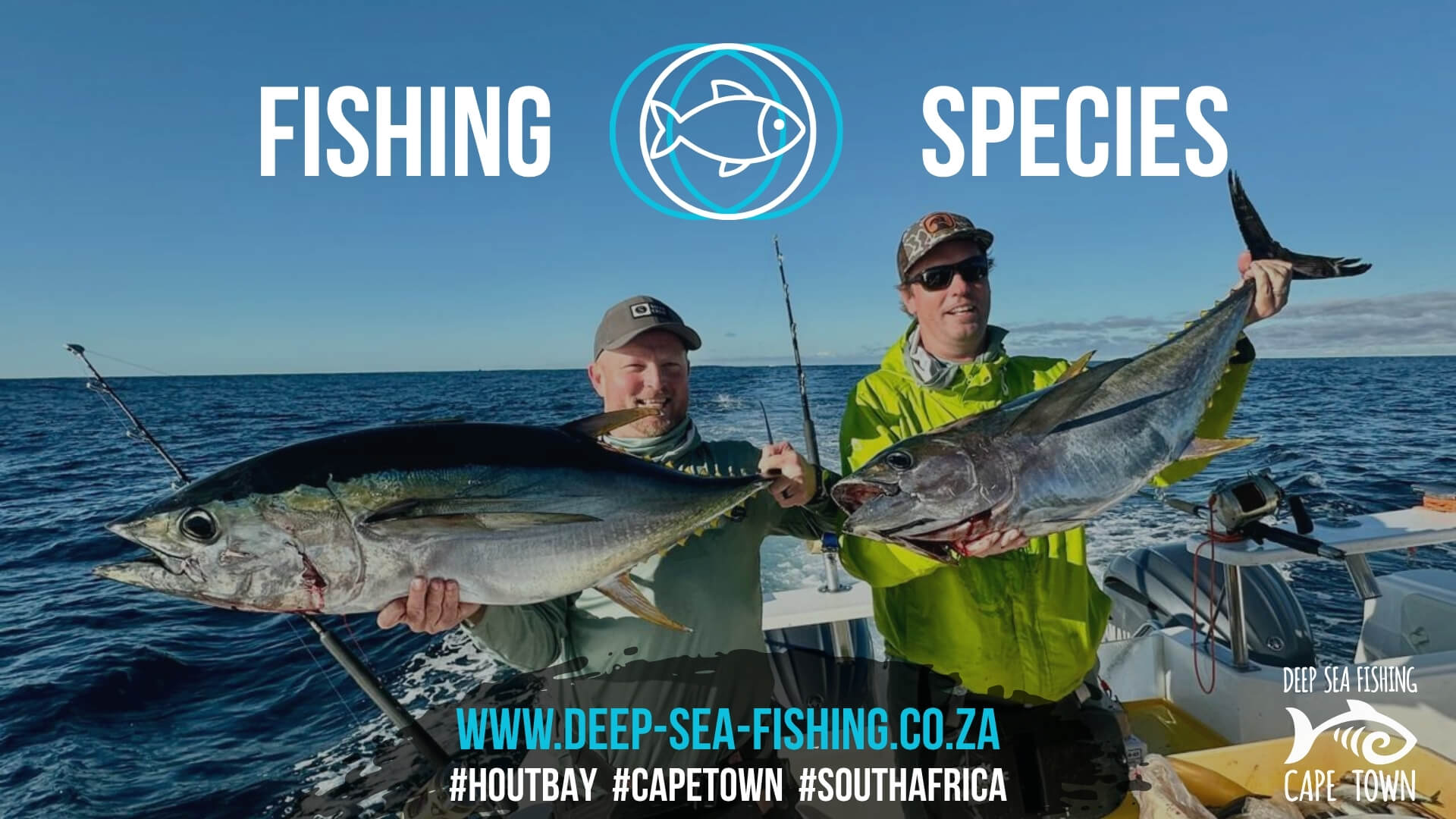
The headline act, and the reason most international anglers book a deep sea fishing charter in Cape Town at all. Fish of 15–50 kg are the everyday reality; fish over 80 kg turn up every season, and the occasional 100 kg-plus specimen makes the local news.
Broadly October through to the end of June, split into two distinct runs.
The summer run: October to mid-January
Warm water arrives, fish are often plentiful, and the average size tends to be smaller. The catch is the weather — the summer south-easter can shut down a week of trips.
The autumn run: March to June
Fewer weather write-offs, more settled seas, and noticeably bigger average fish. Many experienced anglers consider April and May the sweet spot of the entire Cape Town fishing calendar.
Why they move
Yellowfin are highly migratory and temperature-driven. They follow the warm Agulhas water and the productive convergence zones where it meets the Benguela. As the warm water retreats north and east in mid-winter, so do they. The grounds are typically 20–50 nautical miles off Cape Point, including the well-known canyon edges, so expect a long day — a tuna charter is usually a 10 to 14 hour commitment.
Longfin Tuna (Albacore)
Smaller cousins at roughly 10–25 kg, but pound for pound superb sport, and they frequently save a day when the yellowfin are sulking. Longfin tolerate cooler water than yellowfin, which makes them the more reliable target on the shoulders of the season.
Best in the cooler edges of the tuna season — roughly March to July, with a second showing around October and November.
Bigeye and Skipjack Tuna
Bigeye are the deep specialists, often taken over very deep water at the canyon edges, and regarded by many as the hardest-fighting tuna of the lot. Skipjack are smaller, fast and abundant, and often show up in the same trolling spread. Both are incidental rather than targeted, mostly during the warmer months.
Cape Snoek
The people’s fish. Snoek is not glamorous in the way a marlin is, but ask any Capetonian and you will get an argument about the correct apricot glaze. Fish typically run 2–5 kg with the odd monster past 8 kg.
When to target them
Traditionally a winter fish. The old Cape saying is that you catch snoek in the months without an “R” — May, June, July and August. That still holds broadly, though in recent years good catches have run from around September through to January in some seasons, and the timing has become noticeably less predictable.
Why they move
Snoek follow the anchovy and sardine shoals. The big shoals move down the west coast from Namibia and the St Helena Bay and Lambert’s Bay area toward the Peninsula as winter sets in, and the snoek come with them, appearing off Robben Island, Hout Bay and around Cape Point into False Bay. When the snoek are running, the water off Hout Bay can look like a parking lot.
Where and how
Usually 15–20 m of water, jigging or spinning specialised lures around located shoals. Fish finders and birdlife do most of the work. Snoek are also a genuinely exciting fly target for anyone who wants a challenge. Current limits are ten fish per person per day with a minimum size of 60 cm, though these are periodically reviewed, so confirm before you go.
Cape Yellowtail
Also called giant yellowtail or geelstert. If you want a fish that will try to break your wrists and then reef you on the way down, this is it. Most caught fish are 3–8 kg; considerably larger ones are landed every season.
When to target them
Available in some form year-round, but the location shifts with the season. In summer, roughly November to April, they hold in and around Cape Point, the south-west reefs, Bellows Rock, the Anvil and Rocky Bank, and into False Bay. In winter the fish tend to be found further north, around Robben Island and Dassen Island on the west coast.
Why they move
Yellowtail chase temperature and bait. They are happiest around 16–19 °C, feeding on sardine, anchovy, maasbanker and squid, and they will shift many miles to stay in comfortable water with food in it. There is also a well-documented eastward movement of yellowtail along the coast during the winter sardine run, though note that the sardine run proper is a KwaZulu-Natal and Eastern Cape spectacle, not a Cape Town one.
Where and how
Spinning and sight-casting with metal spinners and surface plugs is the local speciality and by far the most fun. Trolling works too.
Geelbek (Cape Salmon) and Kob
Geelbek are a prized eating fish and a rewarding light-tackle target, typically taken on the Atlantic side during the cooler months and often best in low light or after dark. Kob, or kabeljou, are more of a summer proposition. Both are inshore species that make good backup targets when offshore conditions rule out a tuna run.
Marlin and Broadbill Swordfish
Cape Town is not Cape Verde, and nobody should book a charter expecting a guaranteed marlin. That said, blue and striped marlin are landed off the Cape most seasons, almost always in mid-summer to early autumn – January through April – when clean, warm blue water pushes in close enough to be reachable. Broadbill swordfish are a genuine deep-water possibility for the dedicated. These are bucket-list bonuses, not itinerary items.
Sharks
Shortfin mako, blue shark and bronze whaler are all encountered offshore, most often in autumn and winter when the tuna fleet is working the deeper water. Responsible operators fish these on a catch-and-release basis, and shark species in South African waters are subject to specific permit conditions and retention rules that change over time. Your skipper will brief you.
Crayfish / West Coast Rock Lobster
The recreational West Coast Rock Lobster / Crayfish Season is set annually by the Department of Forestry, Fisheries and the Environment, and it is tightly limited – typically a small number of designated days spread between roughly December and April, with a permit, a daily bag limit and a minimum carapace size. Dates change every year and are published by public notice, so always check the current season before booking a crayfish charter out of Hout Bay, Cape Town.
Cape Town Fishing Calendar: Month by Month
| Month | Primary targets | Also running | Conditions |
|---|---|---|---|
| January | Yellowtail, marlin, dorado | Shark, Cape bream, snoek in some summers | Marlin and dorado need blue water; the south-easter can blow hard |
| February | Yellowtail, marlin, dorado | Shark, Cape bream, snoek in some summers | Often the cleanest blue water of the year |
| March | Tuna from mid-month, yellowtail, marlin, dorado | Shark, Cape bream | Tuna return mid-month and the season settles |
| April | Tuna, yellowtail | Marlin and dorado if the water stays blue, shark, Cape bream | Calmer seas and strong tuna fishing |
| May | Tuna, yellowtail | Late marlin and dorado, shark, Cape bream | Last of the tuna run; first cold fronts arrive |
| June | Snoek, yellowtail | Shark, Cape bream | Winter fronts; reef and inshore focus |
| July | Snoek, yellowtail | Shark, Cape bream | Offshore days limited by weather |
| August | Snoek, yellowtail | Shark, Cape bream | Winter fronts dominate the calendar |
| September | Yellowtail, Cape bream | First tuna from the end of the month, shark | Transition month, steadily improving |
| October | Tuna, yellowtail | Shark, Cape bream | Tuna season opens properly offshore |
| November | Tuna, yellowtail | Shark, Cape bream, crayfish season opens | Good numbers of tuna; wind picks up |
| December | Tuna, yellowtail | Shark, Cape bream, crayfish, snoek in some summers | Busy, festive, and weather-dependent |
Seasons as reported by our skippers from years on the water off Hout Bay. Every season is different, and water temperature, bait movement and wind will always beat the calendar. Species reports are always subject to change depending on weather conditions and other factors.
Book Your Fishing Charter
Fishing is subject to weather conditions and availability. Contact us to find out more about our charter schedule .
Frequently Asked Questions
April and May are the standout months. This is when yellowfin tuna run largest and the sea tends to be at its calmest for the whole year, which makes for an easier ride out and back. Longfin tuna and snoek are usually around too, so it’s rarely a wasted trip even if the yellowfin aren’t biting that day.
If April and May don’t fit your schedule, aim for October to December instead. The water is warmer and the weather more forgiving, though the tuna you catch will typically run smaller on average than the autumn fish.
Tuna fishing generally spans October through June, but it isn’t one continuous season. It breaks into two runs: an early window from October to January, and a second from March through June. Between those two runs, activity tends to drop off, so it’s worth timing a trip to land inside one of them rather than the gap.
The core snoek run sits between May and August. Some years it starts earlier or runs longer, stretching from September right through to January, depending on how the bait shoals move and what the water temperature is doing. It’s one of the more variable seasons on this coast, so local reports closer to your trip date are worth checking.
Pelagic fishing charters in Cape Town take you out of the harbour and into the open ocean – past the shelter of the coastline, beyond Cape Point, into deep blue water where yellowfin tuna, longfin, dorado and mako sharks hunt in the top layer of the sea.
“Pelagic” simply means the open water column itself, away from the shore and above the seabed, so a pelagic charter is not a trip to a reef or a wreck; it is a hunt across open water for fast, powerful fish that could be anywhere in it.
Cape Town happens to be one of the best places on earth to do this, because the nutrient-rich Benguela system and the deep water sitting close to the Cape Peninsula put world-class pelagic fishing grounds within a morning’s run of Hout Bay Harbour.
Yellowtail are around all year, but where you find them changes with the seasons. In summer, from November to April, the action concentrates around Cape Point and into False Bay. Once winter sets in, the fish tend to move further north, and Robben Island and Dassen Island become the better bet.
A fishing charter with experienced offshore crew is well suited to running pelagic birding trips — the boats and skippers already handle the same deep-water routes, sea conditions and safety requirements. The main difference is having a birding guide aboard to help with species identification, which we have. Our skipper as well as professional birding guides run the charter all whom have extensive birding knowledge.
A normal sightseeing or fishing charter stays relatively close to shore. A pelagic tour is purpose-built to reach the continental shelf edge, far beyond where standard charters go, because that’s where the deep-sea upwellings concentrate the seabird species that never come near the coast.
Binoculars, a camera with a zoom lens if you have one, sunscreen and a hat, a warm windproof jacket (it’s noticeably colder on open water), and seasickness tablets if needed. A selection of food, snacks & drinks are provided.
Yes – no prior birding experience is needed, and our guides help identify species as they appear. Because the trip covers open ocean swell, we recommend taking a seasickness remedy the night before and morning of your trip if you’re at all prone to motion sickness, and dressing in warm, windproof layers.
Expect a mix of albatrosses (Shy, Black-browed, Atlantic Yellow-nosed), petrels (White-chinned, Pintado/Cape, Great-winged), shearwaters (Sooty, Cory’s), Wilson’s Storm-Petrel, skuas and Cape Gannet, among others. Exact sightings depend on the day, season and sea conditions.
Cape Town pelagic trips run somewhere between 5 and 9 hours, since reaching the shelf edge and back takes time. It is also subject to weather conditions and the location of birds.
Pelagic charter prices depend on number of people on board. A charter is charged as a boat fee per boat and is subject to the ever changing fuel prices. Contact us for current pelagic trip costs.
Our pelagic birding trips depart from Hout Bay harbour, Cape Town.
In South Africa, a pelagic trip usually refers to a chartered boat trip departing from a Cape Town harbour out to the edge of the continental shelf, where the cold Benguela current and shelf-edge upwellings attract one of the highest concentrations of albatross and petrel species found anywhere in the world.
“Pelagic” is a term describing anything that lives in the open ocean, away from the coastline or seabed – as opposed to “coastal” or “benthic” (seafloor-dwelling) species. In birding, a “pelagic species” is a seabird that spends almost its entire life at sea, only coming to land to breed.
A pelagic trip is a boat trip taken specifically to see seabirds — like albatrosses, petrels and shearwaters — that live far out at sea and don’t normally come close to shore. Rather than a sightseeing cruise, the boat heads out past the continental shelf edge specifically to reach the water these species live in.
Yes, though the trips look different from summer. Offshore tuna runs mostly stop, so winter fishing shifts to inshore targets like snoek and yellowtail. July and August are the two toughest months for getting out at all, since they see fewer fishable days than any other point in the year due to weather.
Most charters head somewhere between 20 and 50 nautical miles off Cape Point to find the tuna grounds. By the time you factor in the trip out and back, that adds up to a round-trip distance of 80 to 120 nautical miles. It’s a full day on the water, so charters usually leave early and plan around it.
Weather, and Why You Should Stay Flexible
Cape Town earned the nickname Cape of Storms honestly. Summer brings the south-easter, which can pin the fleet in harbour for days. Winter brings north-westerly fronts, which do the same thing for different reasons. A north-wester in particular deserves respect offshore.
The practical advice: if you are travelling to Cape Town specifically to fish, build in more than one day. Two or three days of availability transforms your odds. Good skippers will move you rather than run a trip in unsafe or unproductive conditions, and that judgement call is worth more than any tackle on board.
Fishing Responsibly in the Cape
Every angler here is fishing a shared resource. Recreational permits are required, bag and size limits apply per species, and several species carry seasonal closures. Reputable Cape Town fishing charters will handle the permit side, brief you on limits, and release everything beyond what is legally retained and genuinely going to be eaten. Yellowtail currently sits on the SASSI green list; other species vary. Ask, and fish accordingly.
Ready to Book Your Cape Town Fishing Charter?
We operate deep sea fishing charters out of Hout Bay harbour, with the biggest selection of partner boats in Cape Town — so whatever the season is doing, there is a vessel and a skipper suited to it. Tackle, bait, catering and safety equipment are all included.
Whether you are after a 60 kg yellowfin in the autumn run, a boat full of snoek in the depths of winter, or a light-tackle yellowtail session off Cape Point, tell us when you are in town and we will put you on the right trip.